


Last Day to File Your ITR: Key Things to Check Before the 31 July Deadline (AY 2026–27)
If you have not completed your ITR filing yet, this is the right time to do so. 31 July 2026 is the due date for many individual taxpayers who are not required to get their accounts audited. Waiting until the last few hours may lead to unnecessary stress due to heavy traffic on the e-filing portal or missing important details.
Whether you are a salaried individual, self-employed professional, NRI, or a foreign expatriate, timely ITR filing helps ensure compliance with the applicable provisions of the Income-tax Act.
Before you click the “Submit” button, here are a few important checks that can help you avoid mistakes.
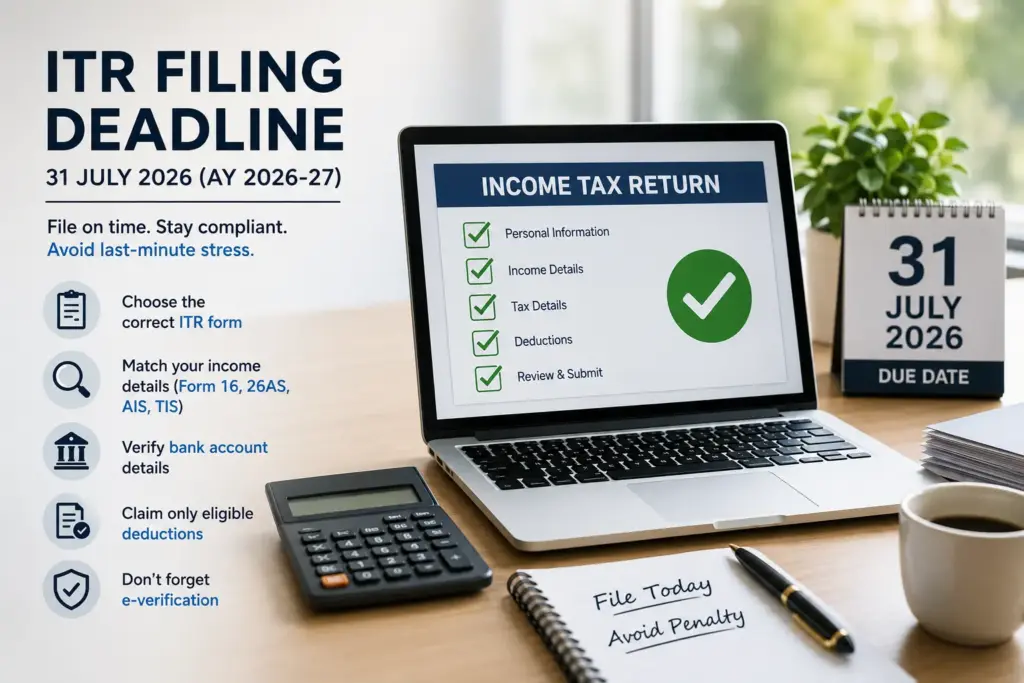
1. Choose the Correct ITR Form
Filing your return using the correct ITR form is the first step. Selecting the wrong form may result in your return becoming defective or requiring revision later.
2. Match Your Income Details
Verify your income details with:
- Form 16 (if applicable)
- Form 26AS
- Annual Information Statement (AIS)
- Taxpayer Information Summary (TIS)
Ensure that salary, interest income, TDS, and other reported income are correctly reflected before completing your ITR filing.
3. Verify Bank Account Details
Double-check your bank account number and IFSC code. If you are eligible for a refund, incorrect banking details can delay the refund process.
4. Claim Only Eligible Deductions
Whether you have opted for the old tax regime or the new tax regime, ensure that deductions and exemptions are claimed only where applicable and supported by proper documentation.
5. Additional Considerations for Cross-Border Taxpayers
Taxpayers who are Non-Resident Indians (NRIs), foreign expatriates, or individuals earning income in multiple jurisdictions may have additional compliance requirements. Where applicable, the provisions of the Double Taxation Avoidance Agreement (DTAA) should be carefully reviewed to determine the correct tax treatment and help avoid double taxation.
Cross-border tax matters may require a detailed review of residential status, foreign income, tax credits, and applicable treaty provisions.
6. Don’t Forget E-Verification
Submitting your ITR is only part of the process. Your return should also be e-verified within the prescribed time. An ITR that is not verified may be treated as invalid.
What If You Miss the Due Date?
Missing the due date may have consequences depending on your case, including:
- Late filing fee, wherever applicable under the Income-tax Act.
- Interest liability, where applicable.
- Delay in processing refunds.
- Certain losses may not be allowed to be carried forward, subject to applicable provisions.
Every taxpayer’s situation is different, so the impact may vary based on the facts of the case.
Final Reminder
If you require clarification regarding the applicable ITR form or tax compliance requirements, you may consider seeking guidance from a qualified Tax Consultant Delhi NCR or a Cross Border Tax Advisor, depending on your specific circumstances.
Neha R Gupta & Co., Chartered Accountants, provides professional services in taxation, foreign tax advisory, regulatory compliance, and advisory, in accordance with the applicable provisions of the Chartered Accountants Act, 1949, and the ICAI Code of Ethics.
Disclaimer
This article is for general informational purposes only and should not be considered legal or tax advice. Tax implications may vary depending on individual circumstances. Please refer to the applicable provisions of the Income-tax Act and official notifications, or consult a qualified tax professional.
